
I love seeing these cycle rickshaws peddling furiously around the narrow flat roads, weaving in and out of the traffic trying to dodge the uneven roads and potholes. It’s not surprising that Dhaka is known as the rickshaw capital of the world there thousands upon thousands on the road at any time of the day.
The peddlers, always men mainly come from rural areas outside of Dhaka and travel in when there is no seasonal work in their villages. Others come from the slums just outside of Dhaka and travel in everyday. The rickshaw wallahs are incredibly fit they have lithe bodies and wiry muscles, it’s incredible to see these small often skeletal men standing up on the bikes peddling furiously with up to four people sitting in the rickshaw who are many times their body weight.
The Rickshaw ‘Industry’ consist of owners at the top of the ladder followed by manufacturers, mechanics, artists, spare part vendors and others on the chain. The Rickshaw peddlers are considered to be the lowest in the rank.
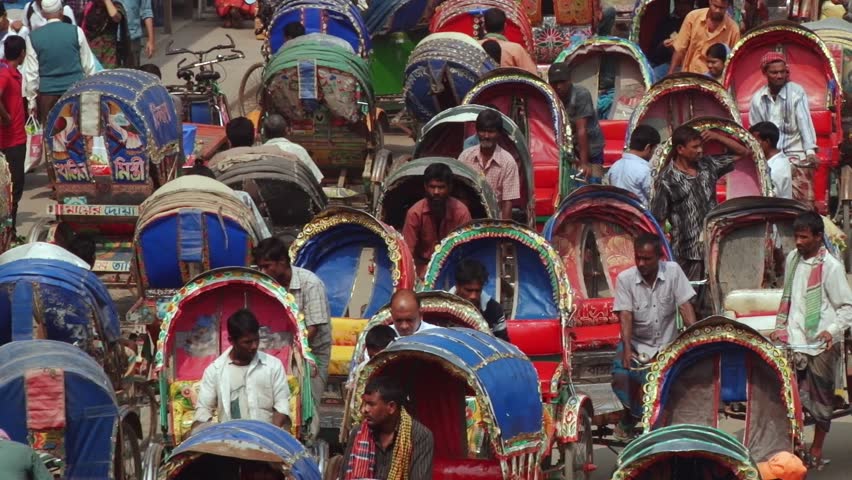
Most of the peddlers hire their rickshaws for about 12 cents a day and on a good day depending on the weather can make $4-5.


These brightly coloured rickshaws decorated with symbols and pictures of movie posters are seem mainly outside of the inner circle of Dhaka. Long term expats here often purchase a rickshaw and have them decorated with symbols from their home country, when they leave they donate them to their riksha-wala. We were told that there is a New Zealand number plated rickshaw in Dhaka decorated with Maori designs, I haven’t seen it yet but still looking.
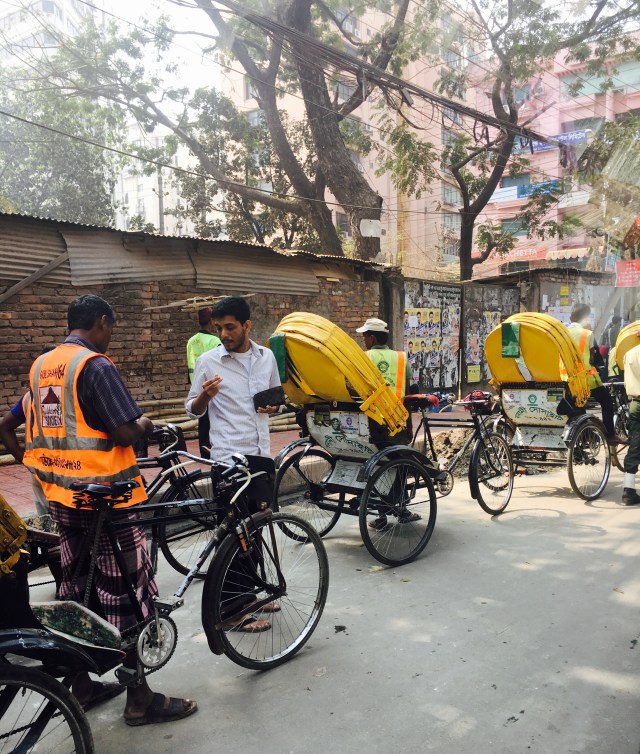
Since the terrorist attack in the diplomatic zone, selected rickshaw peddlers have been trained on security scenarios, their rickshaws are painted yellow and they wear orange and yellow high vis vests with their registration number printed on their backs. Reflective number plates make it easy for the CCTV cameras to identify them. No other rickshaws or buses are allowed within this zone.


 Life is a trip - A Busy Life of leisure ~ travels, family, life and whatever takes my fancy......