
Even though there are beautiful plantations of Banana, Lychee, Mango and many other exotic fruits and vegetables along the way on thing that sticks out is the large number of tobacco fields and brickworks with towering kiln chimneys spewing out thick black smoke. Because there is very little gravel here bricks are made then broken up to use as an alternative, and the rate of construction her on every available plot of land just fuels the pollution problem.
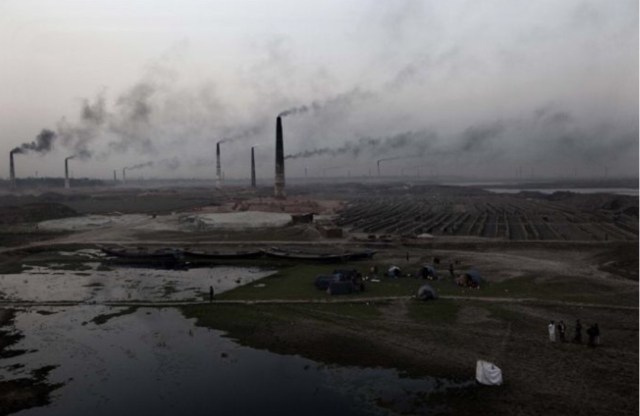
There are thousands of brickworks throughout Bangladesh and the ones we saw just outside of Dhaka go for mile upon mile, we were told that entire families are employed and the children start working when they are very young. The minimum age isn’t enforced with poor rural families trying to keep themselves alive. They make about $1.50 for carrying 1000 bricks on their heads to the ovens underneath the chimneys, about 12 bricks each time. Apart from the obvious health hazards from the dust and the smoke farmers in adjoining fields covered in dust are growing cauliflower and cabbages.
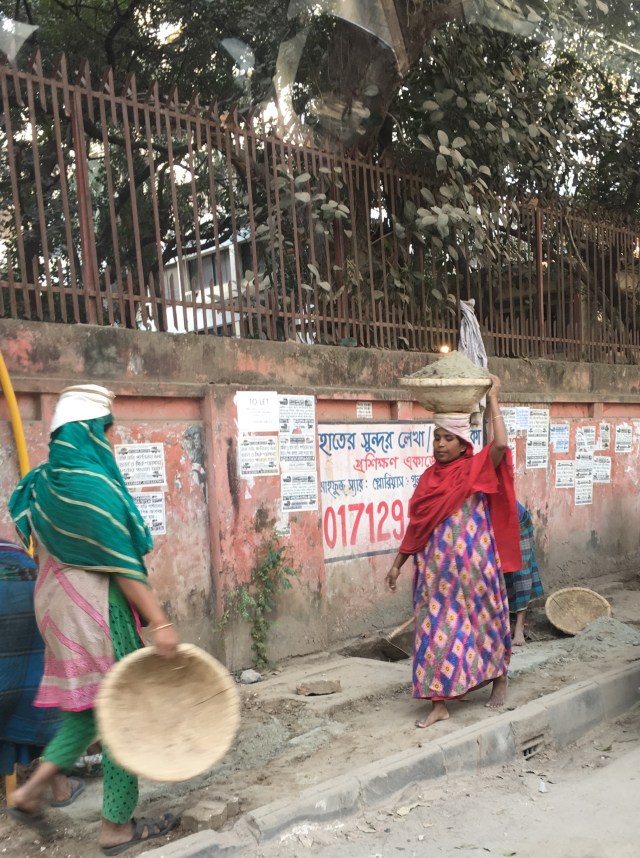
In Dhaka city everyday I see women working alongside men working as hod carriers carrying bricks and concrete on their heads day in day Out.
The tobacco industry in Bangladesh is wholly funded by BAT, the British American Tobacco company. Millions are invested by this company into mainly low income countries such as Bangladesh. There is a push to get farmers to switch to alternative crops but industry subsidies make this difficult.
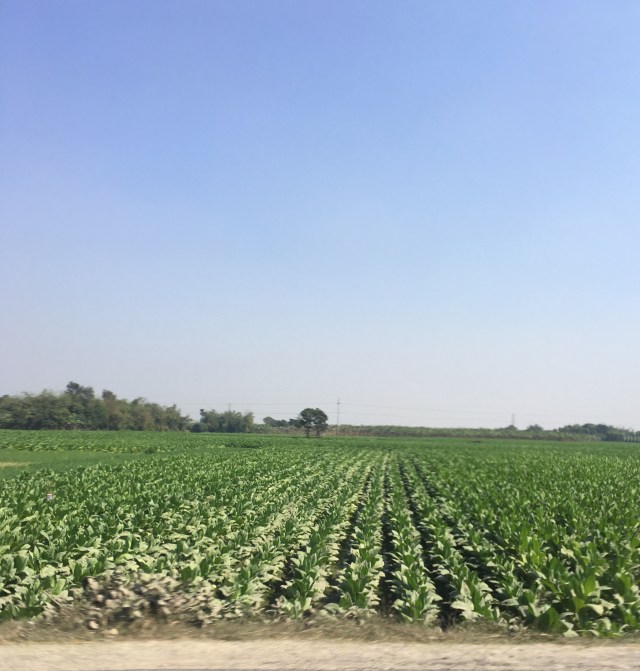
Child labor is rife and during the harvesting season children are pulled from school to work up to 16 hours a day even though Bangladesh has a working minimum age of 14, their health is jeopardized due to the tobacco dust and inhaling smoke from the drying kilns. BAC have investigated claims of child labour but have reported no abuse of human rights but in all reality enforcement of labour laws are virtually impossible.


 Life is a trip - A Busy Life of leisure ~ travels, family, life and whatever takes my fancy......